iPhone 18 Pro Max Revisited: What We Expected, What Apple Announced, and Whether to Go Refurbished
Five days ago, the guessing stopped. Apple confirmed the iPhone 18 Pro Max on the 9th of September 2026, and almost everything the rumour mill had been circling turned out to be true.
That changes the question here. It's no longer whether Apple will announce a variable-aperture camera or a new chip. It's whether those confirmed upgrades are worth paying for over a refurbished iPhone 17 Pro Max, a phone you can buy today with a warranty and a real, checkable price.
Both are legitimate choices. What follows is which one fits how you use your phone.
What the rumours got right, and the one thing nobody predicted
The pre-announcement guesswork held up unusually well. A 2-nanometre-class A20 Pro chip, a new Apple C2 modem, a variable-aperture main camera and a smaller Dynamic Island were all rumoured with real confidence, and all four are now confirmed, official specifications. A larger battery was rumoured too, and Apple's own rating backs that up.
One rumour landed on the wrong product. Reports pointed to under-display authentication as a possible iPhone 18 Pro Max feature. Apple kept a standard front-facing authentication sensor on the Pro Max and gave the under-display camera to something else entirely.
That something else turned out to be the real headline of the event. Apple announced the iPhone Duo, its first foldable iPhone, as a separate product alongside the Pro Max: a titanium-framed device with a 7.6-inch inner display and a 5.4-inch outer one, shipping from the 23rd of October at $1,999 for 256GB. Nearly every spec-sheet rumour about the Pro Max came true. The one nobody centred their predictions on was that Apple would launch a folding iPhone in the same breath.
Quick verdict: new iPhone 18 Pro Max, or refurbished iPhone 17 Pro Max?
Get the iPhone 18 Pro Max if you can name the specific upgrade you'll use: manual aperture control, extra battery headroom, faster charging, or a network problem worth testing the new modem against.
Get a refurbished iPhone 17 Pro Max if the same-storage price gap is substantial and none of those upgrades solve a problem you have.
Keep your current phone if neither case is obvious. Nothing here expires.
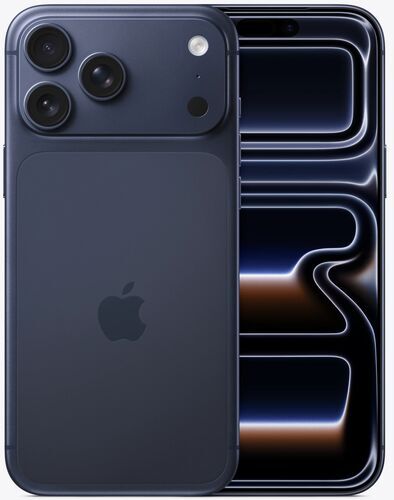
iPhone 18 Pro Max vs iPhone 17 Pro Max: what changed
Camera. The iPhone 18 Pro Max's 48MP main camera gets a variable aperture, moving between f/1.48, f/1.8, f/2.8 and f/4. The iPhone 17 Pro Max's main camera is fixed at f/1.78. Manual aperture control gives a photographer more say over depth of field and light in a single frame, but the 4x and 8x optical-quality telephoto reach is unchanged between the two generations, so zoom range alone isn't a reason to pay more.
Chip and modem. The iPhone 18 Pro Max runs Apple's A20 Pro chip with the new Apple C2 modem, against the iPhone 17 Pro Max's A19 Pro. The gap matters most to sustained heavy work and to anyone who has measured a real signal, roaming or hotspot problem on their current phone. For ordinary calls, messaging and browsing, the difference is unlikely to be the deciding factor.
Battery and charging. Apple rates the iPhone 18 Pro Max for a longer video-playback runtime than the 17 Pro Max, and charges it to 50% in around 15 minutes on a compatible 60W adapter. Treat both as manufacturer ratings, not guarantees. Independent testing already found the iPhone 17 Pro Max's own endurance strong: Tom's Guide measured close to 18 hours in its standardised web-browsing test, a different, real-world number worth keeping separate from either phone's official video-playback rating.
Weight and display. The iPhone 18 Pro Max weighs 249g against the iPhone 17 Pro Max's 233g, roughly 16g heavier for the same size class. The display itself hasn't changed: both are 6.9-inch OLED panels at the same resolution and refresh rate.
The real decision is the price gap
Specifications alone don't decide which phone is the better buy. Compare the unlocked, tax-included price of the same storage tier, then weigh the refurbished phone's battery condition, cosmetic grade, warranty and return terms against it.
As a practical rule rather than a fixed law: when a refurbished iPhone 17 Pro Max costs more than about 25% less than the new phone at the same storage, it's usually the value pick unless you specifically need one of the 18 Pro Max's confirmed upgrades. When the gap narrows to under about 15%, the new phone's fresh battery and longer remaining lifespan get easier to justify. Between those points, let camera control, battery headroom, charging speed and warranty quality make the call.
Compare the full amount payable, including tax, trade-in terms and any financing fees, not just a monthly figure. A large advertised trade-in credit can be worth less than a smaller, unconditional discount.
Buy the iPhone 18 Pro Max if...
You'll use manual aperture control. Deliberate depth of field, low light, or group shots where you want to choose how much stays in focus.
Your battery isn't enough. Even the iPhone 17 Pro Max's already strong endurance doesn't cover your day.
Faster charging solves a real problem. Short top-ups matter more to you than most people.
You've measured a network problem. Weak signal, roaming trouble or hotspot issues worth testing the new modem against, once carrier-specific reviews land.
You'll keep the phone long enough that the premium shrinks per year.
A higher chip number by itself isn't a reason. For ordinary communication and photography, the iPhone 17 Pro Max is already highly capable.
Choose a refurbished iPhone 17 Pro Max if...
The same-storage saving is substantial, and the listing's battery condition, return period and warranty terms are acceptable. The phone underneath that saving is already well proven: Tom's Guide measured roughly 17 hours and 54 minutes of standardised web-browsing battery life, and Austin Mann's field review called the 4x and 8x telephoto options the generation's biggest photographic improvement.
It's worth knowing the honest gaps too. Launch reviewers found visible wear on parts of the aluminium finish, and Lux observed an unexplained light-band artifact in native RAW telephoto files, without pinning down whether it's a hardware or software cause. Neither is a reason to avoid the phone, but both are worth knowing before you buy.
Choose the iPhone 17 Pro Max refurbished when the maths and the trade-offs both check out.
Or step down further: refurbished iPhone 17 Pro Max vs iPhone 16 Pro Max
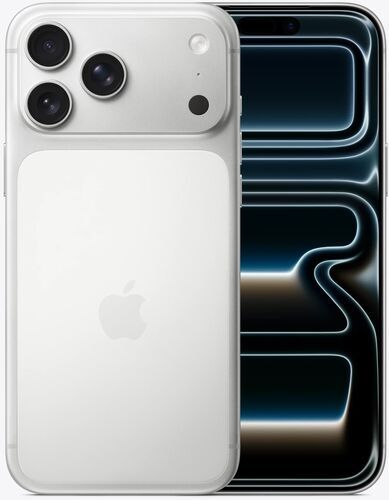
From 1.120,99 €
Battery
5088 mAh
Chip
Apple A19 Pro
Camera
48MP main, 48MP tele, 48MP ultra-wide
Display
6.9" OLED, 120Hz
Weight
233g
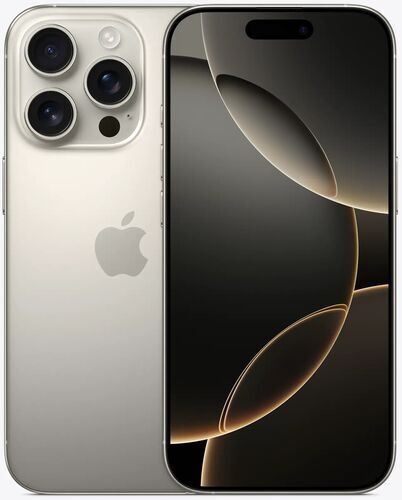
4685 mAh
Apple A18 Pro
48MP main, 48MP ultra-wide, 12MP tele
6.9" OLED, 120Hz
227g
Should you buy the iPhone 18 Pro Max now?
Buy it new only if your current phone can't keep going, your regional model and SIM support are confirmed, and an announced feature solves a problem you have. The return window starts on delivery, so use it.
Otherwise, read the independent tests first. Since launch they have started to cover what matters most: battery life under matched conditions, whether variable aperture visibly improves real photographs, reception and hotspot behaviour on specific networks, sustained performance and surface temperature, drop and scratch resistance, and how stable the launch software is.
A manufacturer specification can tell you a feature exists. It can't tell you how much it will matter in your hands.
Upgrade advice by current phone
From an iPhone 17 Pro Max. Keep it unless variable aperture, battery headroom, charging speed or measured network performance is worth the full cost of switching phones.
From an iPhone 16 Pro Max. Compare the cumulative gain, not one year's headline. The iPhone 17 Pro Max may already cover the camera reach and battery improvement you want, at a lower price. The 18 Pro Max adds variable aperture, faster charging and the new modem on top of that.
From an iPhone 15 generation or older. Either phone can be a meaningful upgrade. Let battery health, storage and total ownership cost decide, not just how new something is.
From a broken phone you rely on for work or essential communication. The cost of downtime can outweigh whatever you'd save by waiting. Prioritise fast delivery and a return policy you can use.
Buying a refurbished iPhone Pro Max: what to check
Confirm the exact model, storage, colour, SIM configuration and carrier-lock status shown in the individual listing. Check whether the battery is described as new, replaced or held to a minimum health threshold, and don't treat cosmetic grade as a stand-in for a battery or parts grade.
Verify the phone isn't activation-locked, blacklisted or tied to outstanding finance. After delivery and before the return window closes, test mobile connectivity, charging, buttons, speakers, microphones, cameras and the touchscreen, and confirm biometric unlock works. Check Parts and Service History where it's available.
Between two similar listings, a longer return period is worth more than a slightly better cosmetic grade.
The environmental comparison, without overclaiming
A new iPhone 18 Pro Max carries its own manufacturing footprint before it ever reaches a shelf. Apple's own Product Environmental Report puts the 256GB model's gross carbon footprint at 69kg of CO2 equivalent, covering the materials, manufacturing and transport behind a single new device.
Choosing refurbished instead avoids most of that footprint by not manufacturing a new device at all. On this pipeline's own Fraunhofer-based savings model, a refurbished iPhone 16 Pro Max at the 256GB tier saves an estimated 58.9kg of CO2 (80% less) and 22,271 litres of water (84% less) compared with buying new. Exact figures for the iPhone 17 Pro Max aren't published in the same dataset yet, but refurbished phones typically save in the range of 70kg of CO2 and 100,000 litres of water against buying new.
These are two different measurements answering two different questions: what a new device costs to make, and what choosing refurbished avoids. Worth keeping separate rather than treating as one number.
Frequently asked questions
Is the iPhone 18 Pro Max confirmed?
Yes. Apple announced it on the 9th of September 2026, with pre-orders on the 12th and availability from the 18th in more than 65 countries.
Is the iPhone 17 Pro Max still sold by Apple?
No. Apple's own current lineup has moved on to the 18 Pro Max and the iPhone Duo. Remaining iPhone 17 Pro Max stock is sold by retailers, marketplaces and refurbishers instead.
Is the iPhone 18 Pro Max's camera completely new?
No. The major confirmed change is the variable-aperture main camera. Telephoto reach is close to unchanged from the iPhone 17 Pro Max.
Is the battery gain guaranteed?
No. Apple's rating is a manufacturer test, not a promise for every person's everyday use.
Is a refurbished iPhone 17 Pro Max still worth buying?
Yes, when the price gap is real and the warranty and return terms are solid. Its display, camera and performance remain suitable for demanding daily use.
Get the iPhone 17 Pro Max or iPhone 16 Pro Max from refurbed today
Whichever way you lean, both the iPhone 17 Pro Max and the iPhone 16 Pro Max are already tested, warrantied and ready to ship from refurbed.
Every refurbished iPhone on refurbed comes with a warranty and a return window, so deciding now doesn't have to be the final word.

Sign up for our newsletter for the first time and save 15€!
Never miss an offer again.
Information about the use of personal data can be found in our Privacy policy.
Get the refurbed app
For iOS and Android


Confirm sign-up
Click the link in our confirmation e-mail to receive your voucher. It will be applicable to purchases from 200€.
- © Refurbed Marketplace GmbH
- Accessibility
- T&C
- Privacy Policy
- Imprint
- Legal Notices
- European Data Act
- Cookie Policy